
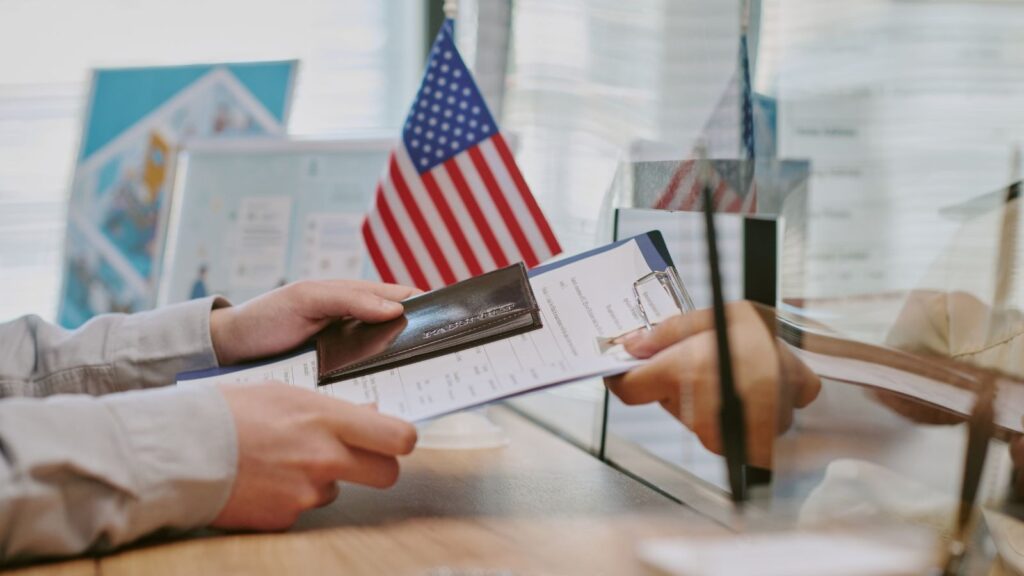
Navigating international paperwork often feels like entering a labyrinth where rules shift at every turn. For many Americans, an apostille is a mandatory requirement to get their documents globally recognized. This guide clarifies the complex journey from local offices to federal agencies and turns a potential nightmare into a predictable, manageable task.
Real Examples of When Americans Need an Apostille
The need for an apostille usually arises from a life-changing event that crosses an international border. Whether you are relocating for a career, pursuing an advanced degree, or settling an estate, the receiving country must be certain that your U.S. paperwork is authentic.
Preparing Documents for Moving to Another Country
Starting a new chapter abroad involves clearing significant legal hurdles. It requires a complete “legal translation” of your identity. If you are applying for a residency visa in Spain or a work permit in South Korea, those governments need proof of your status.
Such international moves require:
- Identity Verification: Providing an apostille for birth certificate records ensures your name and parentage are officially recognized.
- Family Status: A marriage certificate with an apostille is often mandatory to secure a visa for a spouse.
- Background Clearances: Criminal record checks must be authenticated to prove you pose no security risk to the new host nation.
Apostilling Diplomas for Studying Abroad
International universities are increasingly strict about the credentials of American students. A simple photocopy of your graduation certificate will rarely suffice for enrollment in a master’s or PhD program.
Academic admission standards necessitate:
- Degree Validation: Obtaining an apostille for diploma documents proves to a foreign registrar that your educational institution is accredited and your degree is genuine.
- Transcript Verification: Some institutions require every page of your academic history to carry an authentication seal to prevent grade tampering.
- Professional Licensing: If you are a doctor or engineer seeking to practice in Europe or the Middle East, your U.S. licenses must undergo this process to be considered valid by local boards.
Using U.S. Legal Documents in Another Country
Business expansion and personal legal matters frequently require the international use of powers of attorney or corporate bylaws. Without a specialized seal, these documents hold no power outside U.S. territory.
If you are selling property in Mexico or opening a satellite office in France, you will need to authenticate your signatures. This verification confirms that the signatory possesses the rightful capacity to execute the agreement. Such formal validation provides the necessary legal weight for your paperwork to be recognized across foreign borders.
What an Apostille Does and Why Countries Require It
The apostille serves as the official link between two legal systems. Instead of verifying the document’s content, this seal confirms the signer’s authority and the legitimacy of the official mark.
How Apostille Authentication Works
The process functions through a chain of verified signatures. A local official, such as a notary or a county clerk, signs your paper. The state-level authority then confirms that specific signature to maintain the legal sequence.
Finally, the authentication certificate is physically attached to the original. Following a standardized international treaty format, such documentation includes a ten-point numbered list identifying the origin and signer. This uniform appearance allows foreign clerks to recognize the file instantly, regardless of language barriers.
When a Document Must Be Apostilled for International Use
An apostille becomes mandatory whenever a U.S. document is destined for any nation belonging to the Hague Convention of 1961. For member states, such authentication remains the final word. No additional embassy or consulate involvement is required once this seal is applied. The reciprocal recognition effectively slashes the time and expense typically associated with international transitions.
Step 1: Check the Country Where the Document Will Be Used
The very first question you must answer is: “Where is this document going?” The destination determines the entire workflow of your application.
Countries That Accept Apostilles
The Hague Apostille Convention now spans more than 120 member states, creating a unified legal network across Europe, the Americas, Asia, and Africa. If your destination is among them, your path is straightforward. You will follow the standard procedures to obtain an apostille that is recognized by all other member nations.
What Happens If the Country Is Not in the Hague Convention
If the country is not a member, such as the United Arab Emirates, China (excluding Hong Kong and Macau), or Vietnam, an apostille will not be accepted. Instead, you must undergo a multi-tiered consular legalization.
Alternative authentication protocols include:
- State Certification: Your document is first verified by the Secretary of State.
- Federal Authentication: The U.S. Department of State in Washington, D.C., then adds its seal.
- Embassy Legalization: The final step involves taking the document to the embassy or consulate of the destination country for a final stamp.
This process is more expensive and time-consuming than a standard apostille, so identifying the destination country early is vital.
Step 2: Determine Who Issues the Apostille
A common point of confusion is where to get an apostille. The answer depends on the type of document you hold. The U.S. does not have a single apostille office that handles everything.
Apostilles Issued by the Secretary of State
The vast majority of personal and business documents fall under state jurisdiction. This includes birth and death certificates, marriage licenses, and notarized affidavits. Each of the 50 states has its own Secretary of State office responsible for authenticating documents issued within its borders.
For example, if you were born in Los Angeles, your apostille for a birth certificate must be processed by the California Secretary of State. You cannot take this document to Nevada and expect it to be authenticated. For those dealing with high volumes of paperwork or tight deadlines in the western U.S., utilizing professional California apostille services can simplify the logistics of navigating state-specific filing queues.
Apostilles Issued by the U.S. Department of State
Certain documents are considered federal and cannot be handled by a state office. These records represent the United States as a whole and must be sent to the Office of Authentications in Washington, D.C.
Nationwide official filings involve:
- FBI Background Checks: These are federal records and require a federal apostille.
- Naturalization Certificates: Proof of citizenship is a sovereign matter.
- Federal Court Documents: Judgments signed by judges must go to D.C.
- USDA Health Certificates: Required for international pet travel.
Step 3: Make Sure Your Document Meets Apostille Requirements
Submitting the wrong version of a document is the fastest way to receive a rejection. You must ensure your paperwork is apostille-ready before sending it to any government office.
Certified Copies of Vital Records
You cannot simply use a photocopy of your birth or marriage record. State offices require an original certified copy issued by the Department of Health or the County Clerk.
Specific criteria include:
- Raised Seals: The document should typically have a raised, embossed seal or a multicolored security signature.
- Issue Date: Some states require vital records to have been issued within the last few years. Older long-form certificates might be rejected if the official who signed them is no longer in the state’s database.
- Signatory Authority: The name of the registrar on your marriage certificate must be one that the Secretary of State can verify.
Notarized Documents and When They Are Required
For documents that are not vital records (a diploma, a power of attorney, or a corporate agreement), you must first have the document notarized.
Formal validation protocols apply:
- Notary Statement: The notary must include a full acknowledgment or jurat statement. A simple stamp and signature are often insufficient.
- Commission Status: The notary’s commission must be active and in good standing with the state.
- Venue Information: The document must clearly state the county and state where the notarization took place.
If you are getting an apostille for diploma copies, the registrar of your school must often sign the copy in the presence of a notary before the state will accept it for authentication.
Step 4: Submit the Apostille Request
Once your documents are prepared, you must choose a submission method. Each state offers different options, and the choice often depends on how quickly you need the results.
Requesting an Apostille by Mail
Mail-in service is the most common method. It is generally the most cost-effective but requires the most patience. When submitting by mail, you must include:
- The Original Document: Never send a scan unless the state specifically allows electronic filing.
- A Cover Sheet: Most states provide a form where you list the destination country and your contact information.
- Payment: Usually in the form of a check or money order.
- Return Envelope: A pre-paid, self-addressed envelope (tracked services like FedEx or UPS are highly recommended).
Submitting Documents in Person
Some Secretary of State offices allow for counter service or walk-in appointments. This is the fastest way to secure an apostille, often resulting in same-day or next-day turnaround. However, since 2024, many offices have moved to a strict appointment-only model. Always check the official state website before driving to a government building. In-person submission often carries an additional expedited fee but provides peace of mind for urgent travel.
Step 5: Understand Processing Time and State Fees
Financial and temporal planning are the keys to a stress-free experience. The apostille processing time can vary wildly from one jurisdiction to another.
Typical Apostille Processing Time in the U.S.
The duration of the wait depends largely on the level of government handling the request. At the state level, most Secretary of State offices complete mail-in requests within 5 to 15 business days. However, high-volume states like New York or Florida may experience extended backlogs during peak relocation seasons.
At the federal level, the timeline is significantly longer. The U.S. Department of State in Washington, D.C., currently manages a massive volume of requests, which often results in a processing window of 4 to 8 weeks. While professional couriers can ensure your papers are delivered securely, they cannot force a faster internal review by government clerks.
Costs That Applicants Should Expect
The financial investment required for an apostille involves several distinct layers. State government fees are relatively modest, typically ranging from $5 to $30 per document, though some jurisdictions offer discounted rates for multiple papers.
Beyond the government fee, you must account for the cost of notarization, which usually runs between $10 and $20 per signature. Secure logistics add another significant layer; using tracked courier services for both the outgoing and return legs averages $40 to $100, depending on the speed of delivery. Federal authentications carry a fixed fee of $20 per record, payable to the U.S. Department of State.
Common Apostille Mistakes That Delay the Process
Even with a clear guide, small errors can derail your timeline. Avoiding these pitfalls will save you weeks of frustration.
Sending Documents to the Wrong Office
The most frequent error is trying to mix and match jurisdictions. You cannot send a federal FBI report to a state office, and you cannot send a birth certificate from one state to the Secretary of State in another.
Correct filing destinations follow:
- State Documents: Go to the Secretary of State in the state of issuance.
- Federal Documents: Go to the U.S. Department of State in D.C.
- D.C. Local Documents: Go to the D.C. Secretary of the District.
Submitting Documents That Are Not Properly Certified
Many applicants try to apostille a photocopy or a document that was notarized incorrectly. If a document is missing a required county clerk certification or if the notary’s stamp is expired, the state will return the package unprocessed. Always verify that your birth certificate is a long-form or vault copy if the receiving country requires it.
Final Authentication Strategy
A correctly executed apostille transforms a local record into a globally recognized instrument, removing the last bureaucratic barrier to your international goals. Precision during the preparation stage prevents costly delays and ensures that every seal carries the weight required by foreign authorities. Treating these requirements as a strict technical protocol secures that your documentation remains beyond reproach in any jurisdiction.