

In honor of the late Etta James, this article will explore her life, songs, and albums. It also includes a list of other artists who have covered her songs.
Etta James was a singer and songwriter who became famous for her soulful voice. Her most famous song is At Last.
Few female R&B singers have received the kind of consistent acclaim that Etta James has received over the course of her six-decade career; she was once dubbed “the greatest of all modern blues singers” by legendary producer Jerry Wexler, and she recorded a number of timeless hits, including “At Last,” “Tell Mama,” “I’d Rather Go Blind,” and “All I Could Do Was Cry.” Despite having one of the most powerful voices in music, James only belatedly gained mainstream attention, rarely appearing on the pop charts despite scoring 30 R&B hits, and she lived a wild life that could have inspired a dozen soap operas, battling drug addiction and bad relationships while avoiding a variety of health and legal issues.
Etta James was born Jamesetta Hawkins on January 25, 1938, in Los Angeles, California. Her mother was 14 at the time, and she never saw her father, though she later said she had reason to think he was the well-known pool hustler Minnesota Fats. Throughout much of her youth, James was nurtured by friends and relatives rather than her mother, and it was when she was living with her grandparents that she started visiting a Baptist church on a regular basis. James’ voice was a perfect fit for the choir, and despite her youth, she rose through the ranks to become a soloist and perform with them on local radio broadcasts. After her foster mother died when she was 12, James moved in with her mother in San Francisco, where she started to engage in juvenile crime due to a lack of adult supervision. But James’ passion of music became stronger, and she created the Creolettes with a few of pals. The girls caught the attention of legendary bandleader Johnny Otis, who arranged for them to sign with Modern Records after hearing their song “Roll with Me Henry” — a racy response to Hank Ballard’s infamous “Work with Me Annie” — and the Creolettes cut the song under the name the Peaches (the new moniker comes from Etta’s longtime nickname). In 1955, “Roll with Me Henry,” renamed “The Wallflower,” became a smash, but Georgia Gibbs’ cover version was a greater hit, much to Etta’s chagrin. The Peaches split up after their second R&B hit, “Good Rockin’ Daddy,” charted, and James went it alone.
James’ solo career began slowly, with her recording low-selling singles for Modern and playing tiny clubs until 1960, when Leonard Chess signed her to a new record contract. James would record for Chess Records and its subsidiary labels Argo and Checker into the late 1970s, and she embraced a style that fused the passion of R&B with the polish of jazz, working with producers Ralph Bass and Harvey Fuqua, and scoring a number of hits for the label, including “All I Could Do Was Cry,” “My Dearest Darling,” and “Trust in Me.” While James’ career was resurgent, her personal life was not; she began experimenting with drugs as a teenager and was a heroin addict by the age of 21, and as the 1960s progressed, she found it increasingly difficult to balance her habit with her career, especially as she clashed with her Chess producers, fought for royalties, and dealt with a number of other issues. In the mid-’60s, James’ career stalled, but in 1967, she started recording with producer Rick Hall at FAME Studios in Muscle Shoals, Alabama, and with the songs “Tell Mama” and “I’d Rather Go Blind,” she resurrected her career on the R&B charts.
In the early 1970s, James’ popularity had plummeted, her addiction was raging, and she had resorted to small criminality to fund her habit. In 1973, she entered rehab on a court order, the same year she released Only a Fool, a rock-oriented album with producer Gabriel Mekler. Despite the excellent quality of her music, a sober James got by touring tiny bars and performing infrequent blues festivals for much of the 1970s, and she recorded for Chess with little success. The Rolling Stones honored James by asking her to open several of their concerts on tour in 1978, and she signed with Warner Bros., recording Deep in the Night with producer Jerry Wexler. The album got positive reviews and reassured dedicated blues and R&B aficionados that James was still a force to be reckoned with, despite its poor sales. According to her own account, James relapsed into drug addiction after falling in love with a drug addict, and she resumed performing club dates whenever and wherever she could until she was able to break the habit due to a stint at the Betty Ford Center in 1988. The next year, James joined with Island Records and released Seven Year Itch, a strong comeback album produced by Barry Beckett of the Muscle Shoals Rhythm Section. James was determined to keep her career on track, doing numerous live performances and recording on a regular basis, releasing Stickin’ to My Guns in 1990 and The Right Time in 1992.
James joined to the Private Music label in 1994, a year after being inducted into the Rock and Roll Hall of Fame, and produced Mystery Lady: Songs of Billie Holiday, a homage to the great singer she had long acknowledged as a major inspiration; the album won Etta her first Grammy Award. Private Music and James got along swimmingly, and between 1995 and 2003, James recorded eight albums for the label while maintaining a hectic traveling schedule. In 2003, James released Rage to Survive: The Etta James Story, and in 2008, contemporary R&B singer Beyoncé Knowles portrayed her in Cadillac Records, a film partly based on the history of Chess Records. Knowles recorded a faithful cover of “At Last” for the film’s soundtrack and later performed the song at Barack Obama’s 2009 inaugural ball; several days later, James made headlines when she said, “I can’t stand Beyoncé, she had no business up there singing my song that I’ve been singing forever,” during a concert. (James later told The New York Times that the remark was intended as a joke — “I didn’t mean anything…even as a young kid, I’ve always had that comic sort of attitude” — but that she was disappointed that she hadn’t been asked to sing the song.)
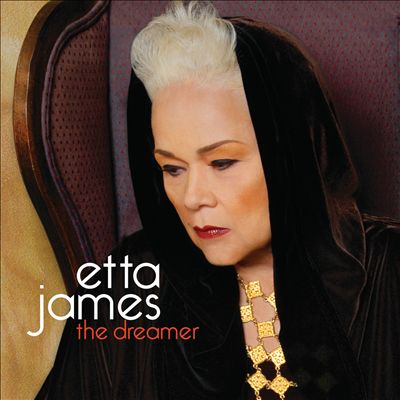 In 2010, James was sent to the hospital with MRSA infections, and it was discovered that she had been treated for painkiller addiction and had been diagnosed with Alzheimer’s disease, which her son said was the probable reason of her outbursts against Knowles. In 2011, James released The Dreamer on Verve Forecast. It was her last album of new material, she said. Etta James died on January 20, 2012, in Riverside, California, at the age of 73, after being diagnosed with terminal leukemia later that year.
Etta James was an American blues singer who had a long career in music. She is known for her hit songs I’d Rather Go Blind, At Last, and A Sunday Kind of Love. Reference: etta james i’d rather go blind.
Related Tags
- what did etta james died of
- etta james parents
- etta james and leonard chess
- etta james father
- etta james’ husband