
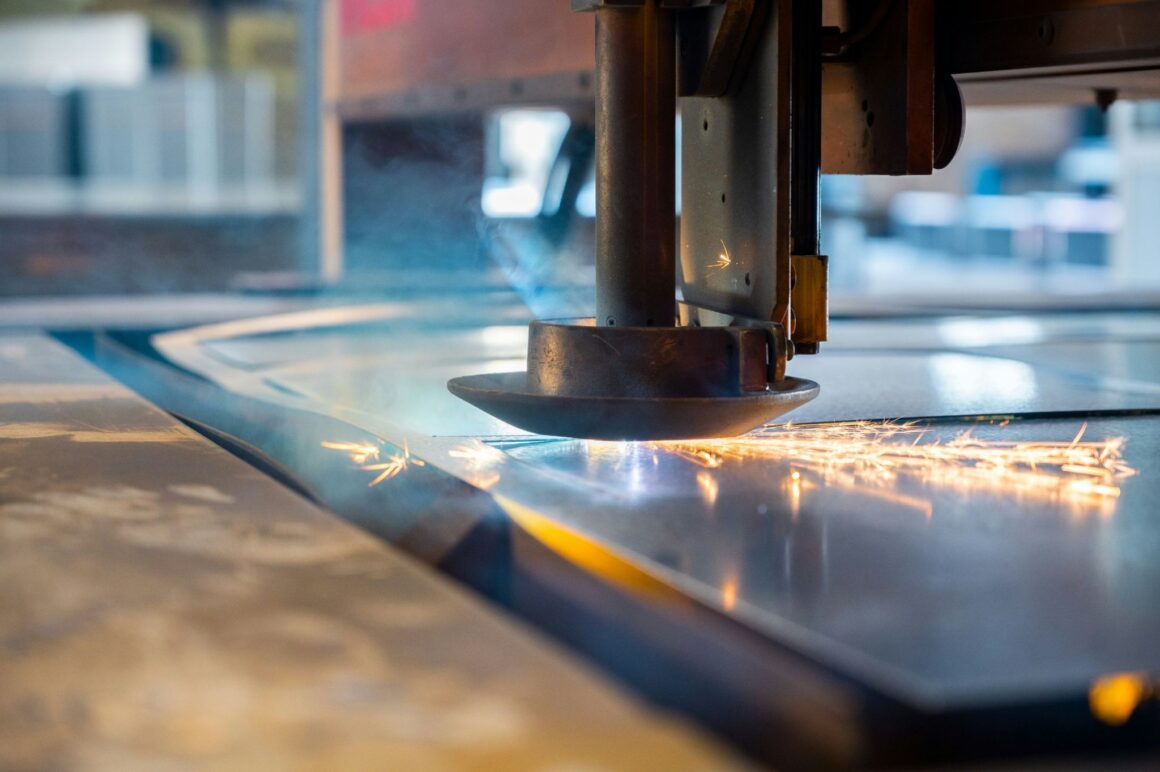
CNC laser cutting has become a cornerstone of modern manufacturing across the British Isles. By using a high-powered, computer-controlled beam of light, this process vaporises material to create incredibly clean edges and precise finishes. Because it’s a non-contact method, it doesn’t apply mechanical stress to the material, making it ideal for delicate or complex tasks.
Whether you’re a designer or a fabricator, the versatility of a CO2 laser allows for high-speed production without the need for expensive traditional tooling. From one-off bespoke pieces to large-scale industrial runs, the technology handles various thicknesses with ease.
Now let’s dive in and explore five popular ways this precision technology is utilised by businesses and individuals today.
1. Professionally-Cut Letters and Signage
One of the most visible applications of this technology is in the creation of high-quality signage. Retailers and businesses frequently use CNC laser cutting to produce 2D and 3D lettering for shopfronts and internal displays.
Using acrylic or composite materials, lasers can produce sharp internal corners and smooth, polished edges that often don’t require any manual finishing. This efficiency is why it’s a go-to choice for sign makers who need to match specific brand fonts and intricate logos.
2. Rapid Prototypes and Product Development
For engineers and product designers, the ability to quickly iterate is vital. CNC laser cutting allows for the rapid production of prototypes, enabling teams to test a design’s form and fit before committing to full-scale manufacturing.
- Speed: Designs can be adjusted digitally and re-cut in minutes.
- Accuracy: High tolerances ensure that components fit together perfectly.
- Cost: No physical moulds are required, which reduces initial setup expenses.
3. Custom Boat Windows and Marine Glazing
The UK has a rich maritime culture, and many boat owners turn to laser technology for replacement windows. Since standard sizes aren’t always a perfect fit for older vessels or custom builds, laser cutting allows for highly specific dimensions.
Materials like polycarbonate are often chosen for these applications because they’re incredibly durable. A CNC laser ensures the windows are cut to the exact curvature and size needed, providing a weather-tight seal and a professional finish for any boat.
4. Intricate Cutting for Decorative Panels
When a project requires fine detail that a mechanical router might struggle to achieve, intricate laser cutting is the answer. This is particularly popular in interior design and architecture for creating decorative screens or filigree patterns.
The focused beam is so precise it can cut complex geometries that would be impossible with traditional saws. Designers often use this for:
- Bespoke furniture inserts.
- Architectural cladding patterns.
- Exhibition display features.
5. Precise Plastic Parts for Engineering
Precision is a must in the engineering sector. Many industrial machines require custom plastic parts, such as gears, spacers, or housings, which must be produced to tight tolerances.
CNC laser cutting provides the repeatability needed for these technical components. Because the laser beam’s path is determined by a digital vector drawing, every part produced is identical to the first, ensuring consistency across every production run.
Let’s Recap
It’s clear that laser technology has changed how we approach fabrication in the UK. Whether you’re looking for a one-off custom shape or a bulk order of technical parts, the combination of speed and accuracy makes it an unbeatable choice for modern projects.
If you’re planning a new design, don’t settle for standard sizes. Embracing these advanced fabrication methods can help you achieve a level of detail and quality that manual methods simply can’t match.