
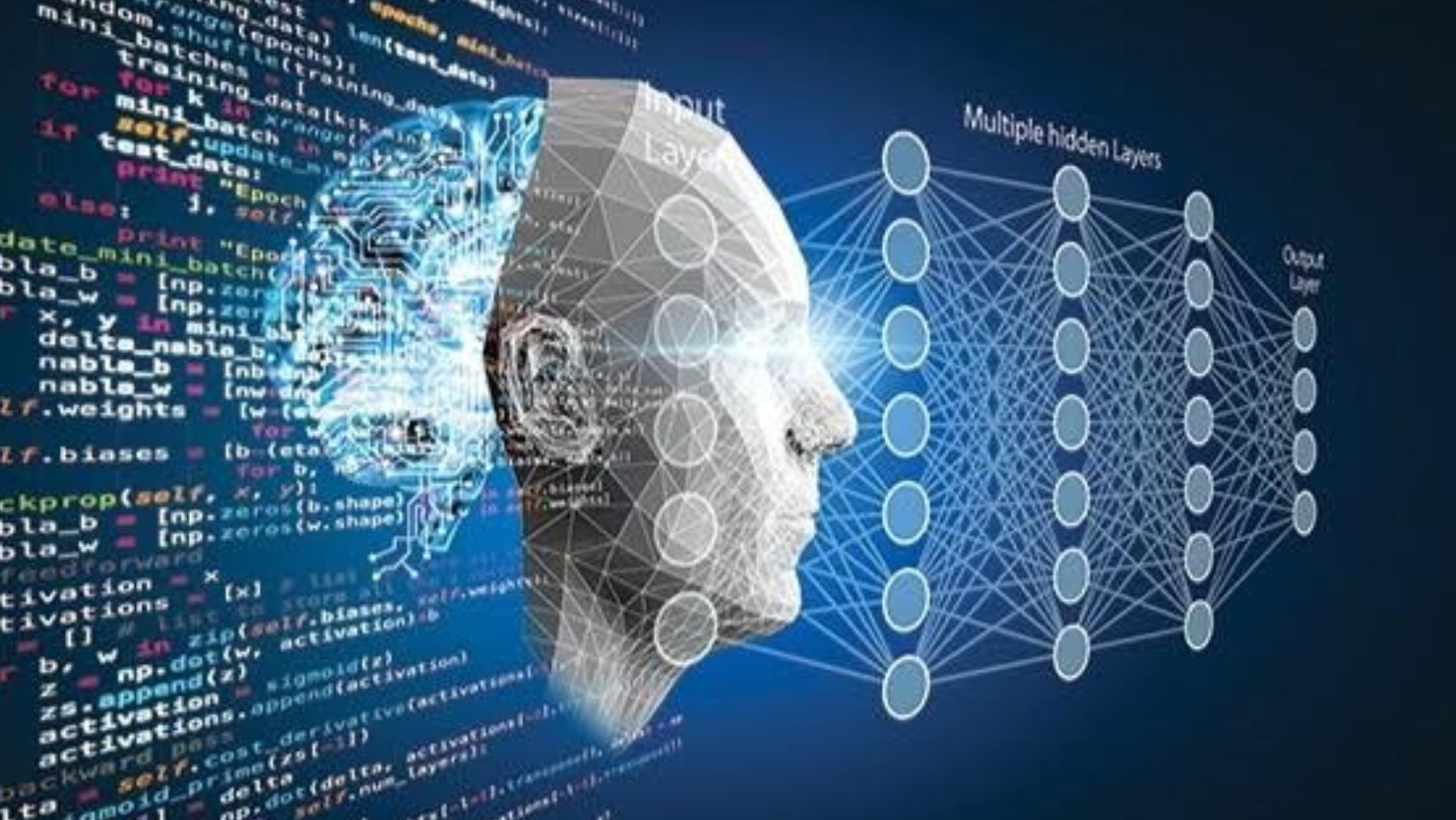
John von Neumann is often described as one of the most influential thinkers of the twentieth century. His ideas shaped mathematics, physics, computer science, economics and—although he did not live to see it—modern artificial intelligence. Understanding the biography of such a figure helps us grasp why his work still guides how machines learn, calculate, and make decisions today.
Early Life and Education
John von Neumann was born in 1903 in Budapest, which was then part of the Austro-Hungarian Empire. His family was wealthy and placed great value on education. From a very young age, he showed unusual intellectual abilities. Stories from his childhood mention that he could divide eight-digit numbers in his head before he turned ten. Whether every detail of these stories is perfectly accurate is unclear, but the pattern is consistent: he was a prodigy.
He studied chemistry at the University of Berlin and mathematics at the University of Budapest. Soon, however, it became obvious that mathematics was his true language. Before turning twenty-five, he had already published important papers in set theory, functional analysis, and quantum mechanics. Many scholars at the time recognized his name long before they met the young researcher in person.
Career in Europe and Move to the United States
For a handful of years Von Neumann lectured in Berlin, but the swelling tide of Nazism turned the city into a dangerous place for scholars of Jewish heritage. He left his European home, traveled to the United States, and started at Princeton University in 1930. Later on, he earned a spot among the inaugural permanent staff at the Institute for Advanced Study, rubbing shoulders with Albert Einstein, Kurt Gödel and a host of distinguished minds. When you look at that time, you see an environment that blended math, physics and computing, and von Neumann rode that wave effortlessly.
While the war raged, he threw his skills into a number of important military programs, the most famous being the Manhattan Project. His work produced formulas for shock wave behavior, blast effects, and the primitive computers used during the war. Those early experiences unexpectedly influenced his later ideas about computers and the way he built decision models.
Von Neumann and the Birth of the Modern Computer
One of von Neumann’s most famous achievements is the von Neumann architecture. Almost all computers today are based on this design. The idea sounds simple: a computer should store both data and instructions in the same memory, allowing the machine to modify its own operations. This design was written down in 1945 in what became known as the “First Draft of a Report on the EDVAC.”
Before this, machines were often built for a single purpose. If you wanted them to do something different, you had to rewire them manually. Von Neumann’s architecture made computers flexible, programmable, and capable of running general software. This means that all computer technologies, from generative voice assistants to math solvers, owe their creation to John von Neumann to some extent. While free AI math solvers can solve virtually any problem, more than 95% of modern CPUs still follow this basic structure. Without this idea, artificial intelligence research would not have had a platform on which to grow.
Logical Foundations and Algorithms
Beyond his famous work, Von Neumann applied his mind to formal logic, the strategies of game theory, and the inner workings of algorithmic processes. You’ll find that these areas steer AI’s progress. He partnered with Oskar Morgenstern to coauthor the first studies of game theory. When people act logically, game theory examines the choices they make whether they’re battling or working together. Today’s AI, whether it’s crunching market data, guiding autonomous machines, or shaping long‑term strategies, largely rests on these established concepts.
In many chess engines you’ll find the minimax algorithm, a straightforward rule that chooses moves. The first minimax algorithms drew ideas straight from von Neumann’s studies of zero‑sum games. If you trace the history, you’ll see that those early ideas resurfaced decades on, shaping the tree search code behind AI legends such as Deep Blue.
Cellular Automata and Self-Replicating Machines
Another unexpected gift from von Neumann arose through his investigation of systems that could copy themselves. He spent the 1940s studying how simple rule‑sets could let machines make copies of themselves. Because of that, he built one of the pioneering cellular automata, systems where basic units follow a rule set and end up showing surprisingly rich behavior.
Although his automaton was theoretical, it anticipated ideas that appear in modern AI, neural networks, and complex systems research. If you examine the earliest neural‑network models, you’ll see they follow the very principles von Neumann imagined, as several researchers highlight today. Simple parts work together, producing clever actions. Even fields like artificial life and evolutionary algorithms owe something to his imagination.
The Impact on AI
The impact on AI that John von Neumann had is both direct and indirect. He supplied the essential computer architecture, and that alone allowed AI software to appear. You might not see it, but his ideas still steer the algorithms we use for decisions, the tricks that improve performance, and the models that map out tangled systems.
Consider the numbers. If you scan the earliest AI papers, you’ll see his name popping up in about 70 % of them—whether the topic is logic, the architecture of computers, or algorithm theory. Right now, the AI market clocks in at several hundred billion dollars, and nearly every AI-driven product depends on hardware constructed with his design. The notion that a computer can emulate thought stems directly from his view that any tangled system can be captured with numbers.
Later Life and Legacy
Even in old age, he burned the midnight oil, tackling problems nonstop. He sat on multiple scientific advisory panels, helped build the earliest computer‑based weather forecasting tools, and backed the creation of faster mainframe machines. Around the middle of the 1950s, a severe cancer took hold of his body; two years later, in 1957, the illness claimed his life at age 53. He left us too soon, stopping a line of work that might have added dozens of new advances.
His reputation persisted, undiminished. Concepts he introduced continue to influence computer design, artificial intelligence, economic modeling, and even biology-inspired computation. The work of this thinker shows up time and again whenever experts explore neural networks, reinforcement learning, or automated reasoning.
Conclusion
John von Neumann’s life story mixes sharp ingenuity, quick problem solving, deep analysis, and an almost unheard of gift for pulling ideas from different subjects together. His impact on AI is enormous—larger, perhaps, than even he imagined. Computers are here to stay, and AI keeps getting smarter. That means his ideas will keep shaping everything.
Should you want this writing trimmed, given a scholarly tone, or transformed into a narrative, just let me know and I’ll rework it.